




2048
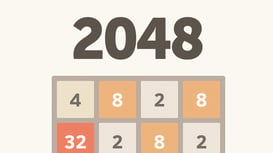
2048 is a mathematical sliding puzzle played on a 4x4 grid. Shift all tiles simultaneously, combine identical numbers to double their value, maintain open board spaces, and construct an organized corner strategy to reach 2048.
2048 transforms a four-by-four grid into a spatial conservation challenge. Every directional input slides all eligible tiles simultaneously toward the board perimeter, combining identical numbers and spawning fresh values into vacant cells.
About 2048
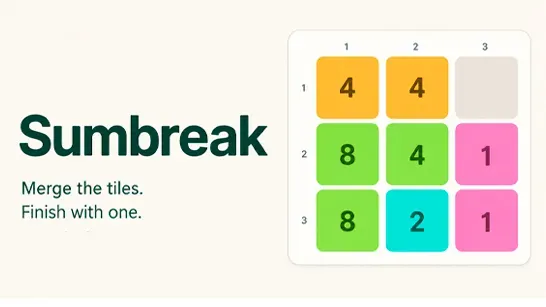
The core system of 2048 is governed by binary powers. Starting from basic values of two and four, colliding tiles bearing identical numbers merge into a single tile displaying their combined sum. A slide that pushes two values of two together produces a four, two fours generate an eight, and the progression continues toward sixteen, thirty-two, sixty-four, and ultimately two thousand forty-eight.
Categorized under number puzzle games, 2048 requires structured logic and forward planning to exercise your brain. Because every directional swipe moves all non-blocked elements at once, players cannot treat pieces as isolated tokens. Every merge must be calculated to preserve open operational squares, as a completely filled board with zero adjacent matches terminates the game.
How to Play 2048
Inputting a directional command causes every tile on the board to travel across its row or column until it strikes the boundary wall or another tile. If two tiles of equal value collide during this motion, they compress into one tile with doubled value. A tile can only participate in one merge operation per turn, preventing triple compressions within a single slide.
After every valid move that shifts the board state, the game randomly populates an empty cell with a new tile, carrying either a two with ninety percent probability or a four with ten percent probability. Progressing toward high scores demands keeping the largest tile anchored in one specific corner, creating a monotonic gradient along the adjacent edge where values descend smoothly. Swiping away from your anchor corner exposes empty spaces behind high-value blocks, risking fatal gridlock.
Corner Monotonicity Tactics
- Anchor your primary corner: Select a specific corner such as bottom-left and avoid pressing the opposing directional key, preventing your highest tile from dislodging into the board center.
- Build descending rows: Keep your largest tile followed immediately by the second-largest, third-largest, and fourth-largest values along the anchored edge wall.
- Keep the anchor row full: Ensure all four cells of your base row contain tiles before executing lateral shifts, which prevents unexpected random tile spawns behind your anchor.
- Count empty cells before merging: Do not execute rapid merges if doing so reduces board flexibility without setting up the next stage of your progression chain.
Game Controls
| Action | PC Keyboard | Mobile Touchscreen |
|---|---|---|
| Slide Board Up | Up Arrow / W | Swipe Up |
| Slide Board Down | Down Arrow / S | Swipe Down |
| Slide Board Left | Left Arrow / A | Swipe Left |
| Slide Board Right | Right Arrow / D | Swipe Right |
More Games Like 2048
- Hexamatch: Hexagonal color sorting and stack clearing compared with Cartesian power-of-two number consolidation.
- Block Breaker: Real-time paddle deflection and brick clearing compared with turn-based mathematical tile sliding.
- Mini Crossword: Orthogonal lexical clue solving compared with recursive numerical tile management on a 4x4 grid.
FAQ
What happens when the 2048 tile is created?
Reaching the 2048 tile achieves the standard victory condition. Players can choose to continue the run to construct higher powers of two, such as 4096, 8192, and beyond, until no legal moves remain.
What causes a game over in 2048?
A game over occurs when all sixteen cells of the grid are occupied and no two adjacent tiles horizontally or vertically share identical numerical values.
Why should I avoid swiping in all four directions?
Using all four directions scatters high-value numbers across the center of the board, trapping smaller tiles between them. Sticking to three primary directions preserves your anchor corner and prevents unmanageable tile arrangements.